Overview
Incorta’s new MS Fabric data destination enables you to push curated, enriched, or transformed datasets directly into MS Fabric.

Supported Incorta Versions: 2024.7.6 and above
Configuration
To enable the MS Fabric data destination, a set of configurations must be completed both in MS Fabric and Incorta:
- Refer to https://docs.incorta.com/latest/concepts-data-destination/#microsoft-fabric-schema-destination-prope...
- Ensure that Incorta is on Azure ADLS
- Request the following from Incorta's Support:
- Generate a SAS token for your cluster's Azure container (The SAS token is to allow read and list access to the Incorta parquet data, so this should be generated for the storage container that has Incorta data.)
- Open the firewall on the tenant directory
- Ensure the token has List and Read permissions
- Fabric Setup:
- Log to an existing Fabric Warehouse
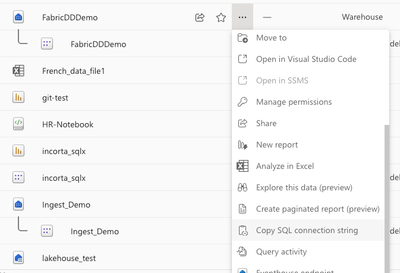
- Copy the SQL connection String from the Warehouse settings:
- How to get the connection string
- Create a (or use an existing) Service Principle - https://learn.microsoft.com/en-us/entra/identity-platform/howto-create-service-principal-portal
- Get the Service Principle ID and Key
- Grant the Service principle access to Fabric workspace as Contributor
- Manage access > Add people or groups > Enter the Service Principle ID > Choose Contributor > Click on Add .Refer to https://learn.microsoft.com/en-us/azure/ai-services/document-intelligence/authentication/create-sas-...
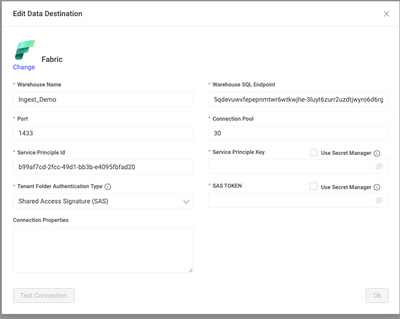
- Now you are ready to create a data destination in Incorta . Create the MS Fabric Data Destination by Navigating to Data->Data Destinations and selecting New.
- Set a data destination for a physical schema that will push tables to MS Fabric.
- In the Navigation bar, select Schema
- In the Action bar, select Settings (gear icon) → Set Data Destination
- In the Set Schema Destination for <SCHEMA_NAME> dialog:
- Select the Schema Destination
- Enter Target Schema Name, which is the table name you want to create in the data destination. The default value is schema name in Incorta
- Load the schema and check the tables in MS Fabric

.png "Employee")